
Blog

  • The Rare Earth Realignment: Why the US-India Minerals Deal is a Multi-Billion Dollar Hedge on China

    The global semiconductor and AI race is no longer just about software architecture and foundry capacity—it is a brutal, ground-level war for the periodic table. While the diplomatic tape from New Delhi frames the newly signed US-India critical minerals framework as an achievement in bilateral cooperation, global macro desks are reading between the lines. This is a targeted capital deployment designed to dismantle China’s near-monopoly on rare earth elements (REEs) and structurally reset India’s industrial balance sheet.

    For years, the technology sector has operated under an unsustainable vulnerability. China controls 60% of the world’s rare earth deposits and processes a staggering 90% of the global supply. Last year’s trade war proved that Beijing is entirely willing to use its dominance over these nonfuel minerals—essential for permanent magnets, EV motors, defense hardware, and AI infrastructure—as a geopolitical weapon. US Secretary of State Marco Rubio’s arrival in New Delhi to finalize this bilateral framework, paired with a concurrent $20 billion Quad initiative, signals that Washington is aggressively funding a global supply-chain counter-offensive.

    The immediate economic impact on India’s domestic market is heavily tied to a significant capital injection. Under its current financial year budget, New Delhi has established dedicated “rare earth corridors” across Odisha, Kerala, Andhra Pradesh, and Tamil Nadu. While the US International Trade Administration notes that India currently produces only four of its thirty designated critical minerals due to infrastructure bottlenecks, the country sits on 13.15 million tonnes of monazite, containing over 7 million tonnes of rare earth oxides. By linking India’s massive, unrefined reserves with Western capital and processing technology, the framework is designed to convert raw domestic geology into high-yield industrial hubs.

    The strategic shift took shape in the high-security meeting rooms of New Delhi, just as Rubio wrapped up a four-day diplomatic push to repair fractured trade and energy ties. For months, Western supply chains had been reeling from the dual shocks of the war in Iran and Chinese export restrictions on critical minerals. Recognizing that the U.S. relies entirely on imports for 12 critical minerals, Rubio and Indian External Affairs Minister Subrahmanyam Jaishankar moved past standard diplomatic pleasantries to address the structural bottlenecks binding both nations.

    On the ground, the commercial architecture of this deal mobilized rapidly. Under the umbrella of the Quad initiative, governments and private institutional players moved to activate a $20 billion war chest composed of loans, subsidies, and long-term purchase agreements. This capital is being funneled directly into India’s newly minted rare earth corridors, transforming sleepy coastal mining sites into high-tech processing zones.

    Simultaneously, Indian engineering firms began partnering with American tech companies under the Pax Silica initiative, laying down the infrastructure required to manufacture high-performance permanent magnets locally. This massive industrial pivot effectively ensures that India bypasses Chinese processing facilities entirely, providing global macro funds with a viable, ring-fenced alternative for tech-component sourcing.

    For global asset allocators, this framework alters the long-term valuation of India’s industrial and technology sectors. The deal represents a massive sovereign de-risking event. By securing Western processing technologies and long-term purchase guarantees from the Quad, India is transitioning from a passive commodity holder into a critical, vertically integrated node of the global tech stack.

    The structural reliance on Chinese supply chains has finally met a well-capitalized, state-backed competitor. For your portfolio, the implications are clear: the long-term cap on India’s advanced manufacturing sector is lifting. The real wealth of the next decade isn’t just in the code—it’s in the crust.

  • The Sovereign Squeeze: Why the First Island Chain Naval Surge Limits Growth

    The Sovereign Squeeze: Why the First Island Chain Naval Surge Limits Growth

    A massive geopolitical realignment is underway in the Indo-Pacific, creating immediate vulnerabilities for global asset allocators. Within hours of the conclusion of the Beijing summit between President Trump and Xi Jinping, the Chinese People’s Liberation Army (PLA) deployed an unprecedented armada of over 100 navy and coast guard vessels across the First Island Chain. This aggressive maritime surge coincides directly with Washington’s decision to freeze a record $11 billion arms package intended for Taipei, citing a critical need to conserve domestic munitions for the ongoing conflict in Iran. Concurrently, Iranian state media has publicly disputed Washington’s claims regarding a peace breakthrough, asserting that Tehran will maintain exclusive operational management and restrictive permit control over the Strait of Hormuz even if a truce is finalized.

    For global macro funds and quantitative desks, these developments represent a coordinated, multi-theater squeeze on the American security umbrella. The sudden freeze on Taiwan’s defense package—which included critical high-mobility artillery rocket systems (HIMARS), loitering munitions, and Javelin missiles—signals to regional actors that the United States is facing severe logistical constraints due to its dual-front commitments. By launching an expansive naval deployment that stretches from the Yellow Sea down to the South China Sea, Beijing is actively testing this defense vacuum. The market must now price in a heightened probability of localized maritime blockades and structural supply chain vulnerabilities, particularly within the advanced semiconductor corridors of the Taiwan Strait.

    The immediate economic fallout is already hitting the tape in Taipei, where domestic political risk is compounding the external threat. Taiwan’s opposition-controlled parliament recently blocked one-third of a requested $40 billion defense budget, stalling plans to scale domestic military drone production from 15,000 to 100,000 units per month. With Washington signaling that its arms sales can be leveraged as a diplomatic bargaining chip with China, institutional capital is beginning to discount the longevity of Taiwan’s defensive shield. This sovereign vulnerability is amplified by the standoff in the Middle East, where Iran’s rejection of “free passage” through the Strait of Hormuz ensures that global energy and insurance risk premiums will remain structurally elevated for the foreseeable future.

    The escalation across the Indo-Pacific and Middle Eastern theaters began in the waters surrounding Taiwan just as Air Force One cleared Chinese airspace. For weeks, Chinese marine survey and research vessels had been quietly plotting hydrological corridors under the guise of routine mapping. But as the diplomatic delegation departed Beijing with nothing more than minor commercial promises, the quiet operation shifted into a synchronized deployment. Over 100 gray-hull warships and heavily armed coast guard vessels abruptly materialized along the maritime borders of South Korea, Japan, and the Philippines, effectively tracing a perimeter around the first island chain.

    On the water, the tactical shift was immediate. Taiwanese coast guard cutters began intercepting aggressive, close-quarters maneuvers by Chinese research vessels conducting unauthorized surveys within Taiwan’s contiguous zone. Sirens blared over the radio as Taiwanese crews issued verbal warnings to back off, only to be met with silent, steady course corrections from the Chinese ships. This maritime pressure was precisely timed to exploit growing fractures within Taipei itself. In the streets of the capital, hundreds of protestors gathered outside the parliament building, demanding that opposition lawmakers release blocked defense funds, while traders watched domestic tech indices begin to hedge against a localized blockade.

    Thousands of miles to the west, a parallel breakdown was occurring within the diplomatic backchannels of Tehran. As Western markets rallied on optimistic rumors of a comprehensive peace framework, Iranian officials reviewed the exchanged texts regarding the Strait of Hormuz. Realizing that Washington was publicly claiming credit for a total, unconditional reopening of the shipping lanes, the Islamic Republic’s state media issued a sharp, public correction. They made it clear that while ship volumes could return to pre-war numbers, every tanker, container, and bulk carrier would still have to apply for individual Iranian permits, navigate state-determined routes, and submit to exclusive local management.

    The final blow landed in Washington. Facing deep munitions deficits from the prolonged conflict in the Middle East, the White House formally placed the $11 billion arms package to Taiwan on hold. The realization swept through institutional trading desks that the administration had overextended its logistical capacities. The dual-front pressure loop was complete: an unresolved war in Iran had successfully bottlenecked American defense capabilities in Asia, giving Beijing the exact window it needed to flood the regional waters with an intimidating show of force.

  • The Sovereign Margin Call: Why India’s “Austerity” is a Red Flag for Equities

    The math flashing across the terminal does not care about political rhetoric. When a government suddenly asks 1.4 billion people to suspend foreign vacations, halt gold purchases, and drastically slash fuel consumption, you are no longer looking at a routine policy address. You are witnessing a sovereign margin call in real-time.

    Prime Minister Narendra Modi’s unexpected declaration of “Sankat Ka Kaal” (a time of crisis) marks a severe macroeconomic pivot. For the past year, the prevailing narrative was one of unshakeable “strategic autonomy”—a supposed diplomatic masterclass where India navigated the crossfire of Western sanctions and Middle Eastern conflicts to secure cheap, reliable energy. But with Brent crude violently breaching $120 a barrel on the back of US-Iran escalations, that diplomatic hedge has officially collapsed.

    Let’s look at the baseline data. India’s foreign exchange reserves currently sit at roughly $690 billion. Against a ballooning $100 billion annual oil import bill in a strong-dollar environment, that buffer is thinning rapidly. State-backed Oil Marketing Companies (OMCs) are bleeding an estimated ₹30,000 crore a month to artificially suppress prices at the pump.

    This is where the narrative turns. You cannot plug a systemic, structural energy deficit by asking citizens to dust off their bicycles. The government has exhausted its institutional shock absorbers, and the resulting macroeconomic wreckage is now being offloaded directly onto the consumer.

    When the state asks families to delay buying wedding gold, it isn’t making a cultural request; it is desperately attempting to plug capital flight. India imported nearly $72 billion in gold last fiscal year. Every single ounce of gold bought in Zaveri Bazaar is a dollar draining from the RBI’s reserves. When the state asks commuters to use the metro or pivot back to pandemic-era remote work, it is a glaring admission that the Rupee’s exchange rate is mathematically defensible only if domestic physical consumption craters.

    Consider the localized, ground-level impact. A mid-level executive in Mumbai cancels a planned family trip to Dubai. A household in Punjab defers purchasing 50 grams of gold for a daughter’s wedding. A logistics firm in Chennai freezes its fleet expansion due to looming diesel hikes. Individually, these are framed as patriotic sacrifices. Aggregated across the subcontinent, they represent a catastrophic contraction in consumer spending.

    For a global asset trader, the signals are blindingly clear. The foreign policy apparatus failed to secure a long-term, fixed-price energy corridor, leaving the Indian economy entirely exposed to the volatility of the Strait of Hormuz. Because diplomacy failed to secure the supply side, the government is being forced to violently engineer the destruction of the demand side.

    How do you trade a sovereign liquidity squeeze masked as national duty? You short the narrative.

    Expect immediate, severe headwinds for consumer discretionary, aviation, and retail sectors. Domestic tech and fast-moving consumer goods (FMCG) will likely issue downward earnings revisions by the next quarter as this mandated “austerity” trickles into corporate balance sheets. The Rupee will continue to test historic lows as institutional capital seeks the safety of US Treasuries.

    A nation cannot substitute a coherent energy security strategy with a moral appeal to frugality. The dollar reserves are draining, the diplomatic shield has cracked, and the actual cost of the crisis is finally pricing itself into the market. Prepare your books. The winter is going to be exceptionally long.

  • Just-in-Time or Just-in-Case? Quantifying the Fragility of India’s Auto Boom

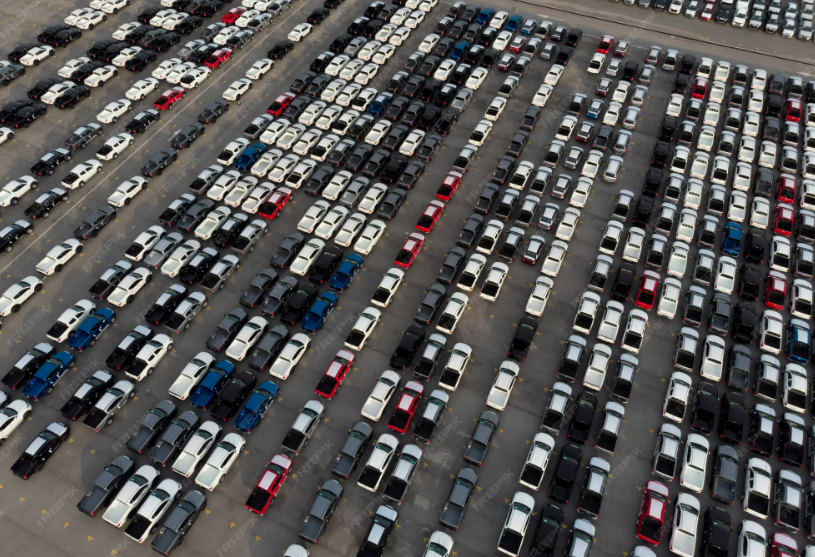
    The Indian automotive sector just closed a record-breaking fiscal year, with sales touching 4.6 million units. In the data, this looked like a “Goldilocks” scenario—high growth, low inventory, and strong consumer sentiment. But the ongoing West Asia conflict has introduced a “Black Swan” variable into the equation: the energy-dependency bottleneck.

    At Pragma Quant, we analyze industries through the lens of Structural Robustness. The latest warning from the Society of Indian Automobile Manufacturers (SIAM) highlights a critical vulnerability: the automotive supply chain isn’t just dependent on parts; it’s dependent on the molecules—specifically LPG, propane, and natural gas—that power the high-heat forging, casting, and painting processes.

    The “Molecule” Arbitrage

    The naval blockade of Iranian ports has effectively choked the supply lines passing through the Strait of Hormuz. For Indian OEMs (Original Equipment Manufacturers), this is an industrial input crisis. We are observing a significant “Input-Price Divergence.” While demand remains strong (reflected in high enquiry rates), the cost of production is no longer predictable.

    When a manufacturer has to review inventory every three days instead of every month, the “cost of carry” for that inventory spikes. In quantitative terms, the industry is shifting from a high-efficiency/low-margin regime to a high-risk/high-volatility regime.

    The EV Acceleration Effect

    One fascinating data point is the shift in consumer behavior. We are modeling a permanent “Structural Alpha” for the EV segment. If the current energy friction persists, the ICE (Internal Combustion Engine) vehicle segment faces a “Double Whammy”: increased production costs (due to gas shortages) and decreased consumer demand (due to fuel price spikes).

    Quantitative Strategy for the Auto Sector:

    De-Risking via Energy Diversification: We monitor which manufacturers have transitioned from LPG to Piped Natural Gas (PNG). Those with diversified energy inputs will show significantly lower volatility in their quarterly EBIT margins.

    Freight-Rate Sensitivity: With shipping routes diverted, “Air-Freight” is becoming the new standard for critical parts. This is a massive “margin-killer.” We look at the correlation between air-cargo indices and OEM stock prices to identify over-leveraged players.

    The Pivot to Domesticity: The long-term “Pragma” play is in the Tier-2 and Tier-3 suppliers who are regionalizing their networks.

    In a world where energy is weaponized, the winner isn’t the one with the biggest order book—it’s the one with the most resilient assembly line.

    Read our full deep-dive on the Pragma Quant blog: [blog.pragmaquant.com]

  • The Blockade Protocol: Quantifying Geopolitical Friction in an Era of Failed Diplomacy

    In the quantitative world, we often treat “politics” as noise—a stochastic variable that eventually reverts to the mean. But the news of the U.S. blockade on Iran following the collapse of diplomatic channels represents something far more systemic. It is a “regime shift” in the truest sense.

    At Pragma Quant, we don’t trade the news; we trade the structural impact of the news on market micro-structures and global liquidity. When a major oil producer and a regional power are effectively severed from the global ledger, the ripple effects are non-linear.

    The Volatility of No-Return
    Historically, diplomatic “friction” creates localized volatility. However, a total blockade after failed talks signals a transition from “cooperative game theory” to “zero-sum dynamics.” For the algorithmic trader, this means the historical correlations between Brent Crude, the USD, and emerging market (EM) currencies are currently being rewritten.

    We are observing a spike in “jump-diffusion” models. The probability of extreme price gaps in energy markets has increased by a factor of 4x compared to the Q1 baseline. If you are still using 20-day moving averages to hedge your energy exposure, you aren’t just behind—you’re exposed.

    The Liquidity Vacuum
    A blockade is more than a physical barrier; it is a financial vacuum. We expect to see a significant “flight to quality” into USD-denominated assets, yet simultaneously, a “de-dollarization” premium being priced into alternative stores of value (Gold, Digital Assets, and Swiss Francs).

    The Pragma approach involves monitoring the Basis—the difference between spot and futures prices—which is currently screaming “supply-side shock.” We aren’t just looking at the price of oil; we are looking at the cost of insuring the movement of that oil. Shipping insurance and freight derivatives are the leading indicators that the broader equity markets haven’t fully priced in yet.

    The Quantitative Takeaway
    For our institutional partners, the strategy is clear:

    Stress-Test for Tail Events: Your VaR (Value at Risk) models must be calibrated for a “high-friction” environment.

    Monitor Cross-Asset Contagion: Watch the Yen and the Euro. If energy costs spike, industrial-heavy economies will see a rapid decay in their trade balance, leading to algorithmic selling pressure in their respective equity indices.

    Volatility is the Asset: In a world where diplomacy fails, certainty is the rarest commodity. We position our algorithms to capture the widening spreads that occur when human emotion overrides technical levels.

    Pragmatism isn’t about hoping for peace; it’s about calculating the cost of conflict.